




Lina Obregón
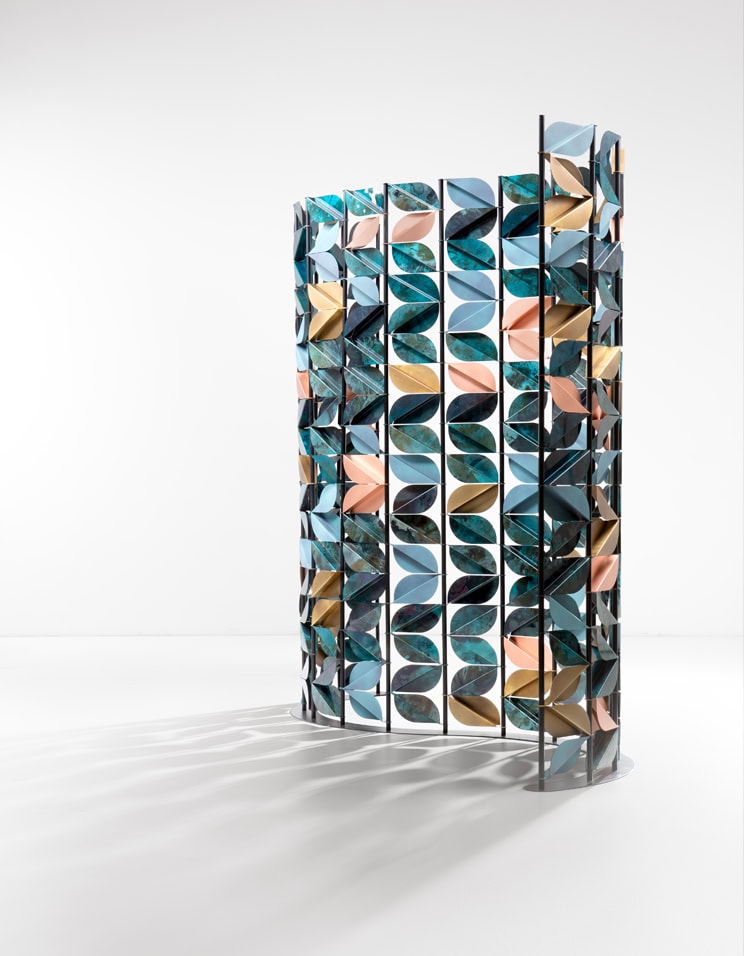
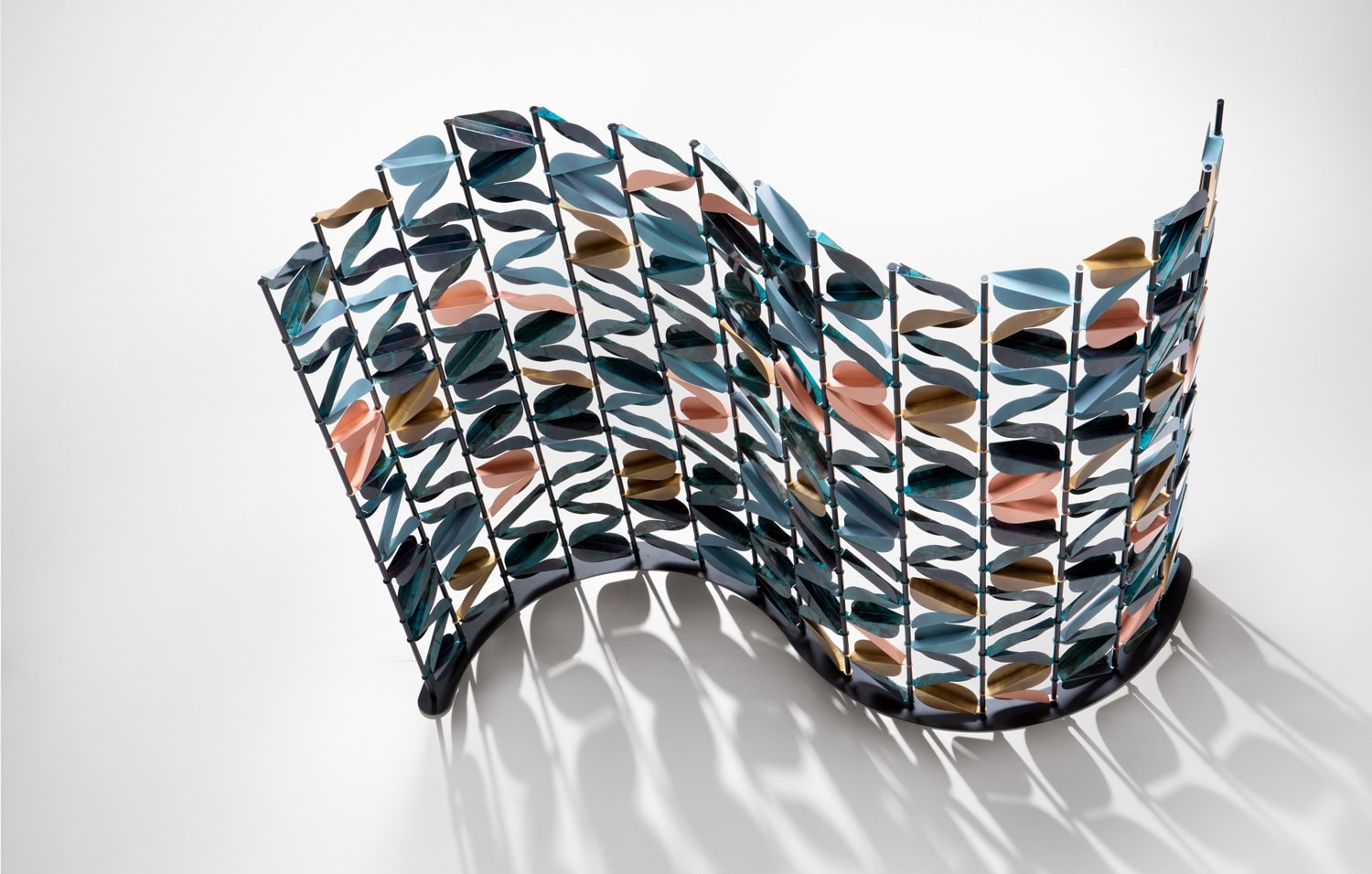
Through a thoughtful exchange with Lina Obregón, De Castelli reflects on the interplay between form and chromatic nuances. The result is Bosque, a room divider conceived not only as a functional object but as a decorative statement that introduces movement, rhythm, light, and narrative depth into the space.
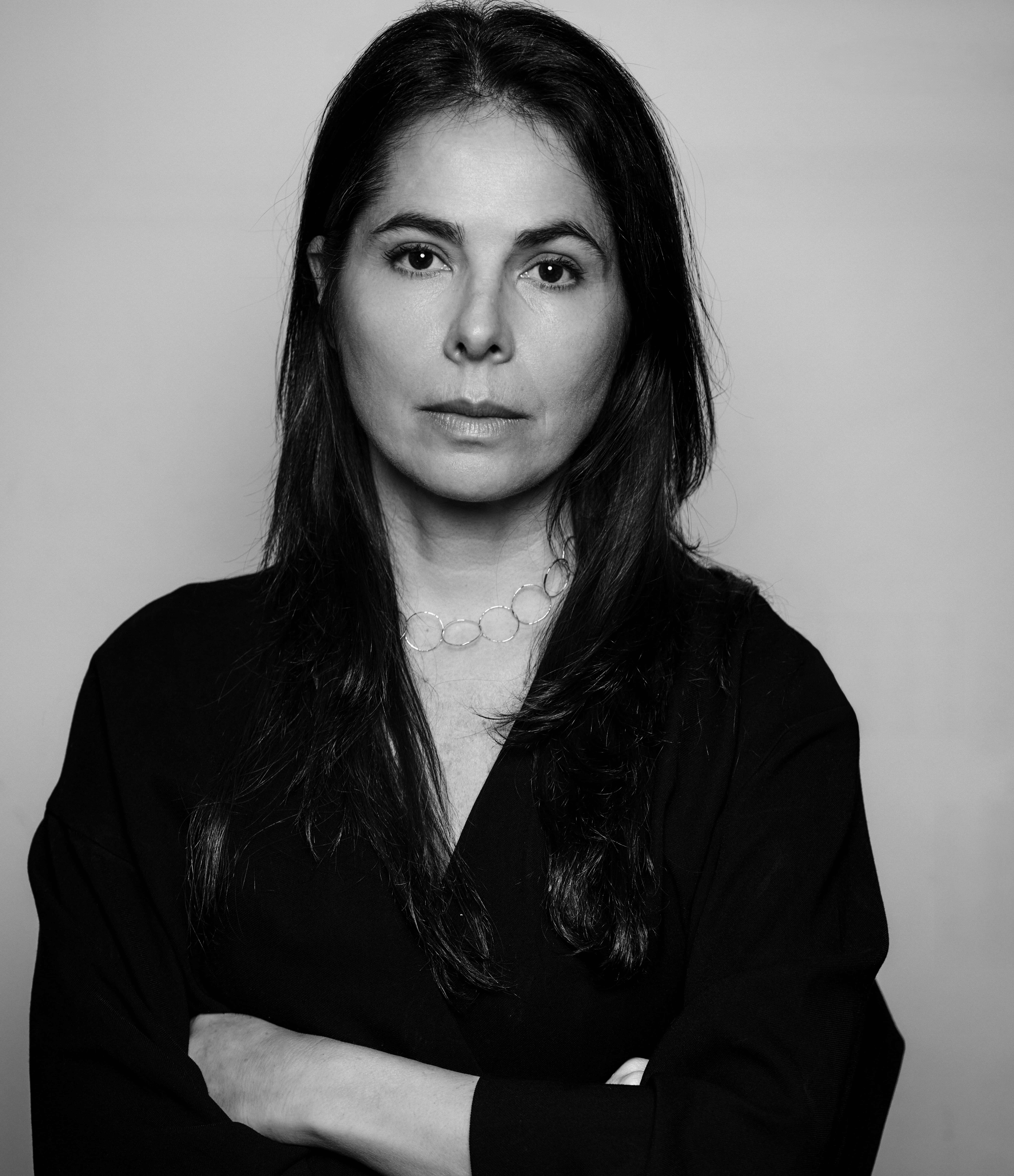
DC What inspired the development of Bosque?
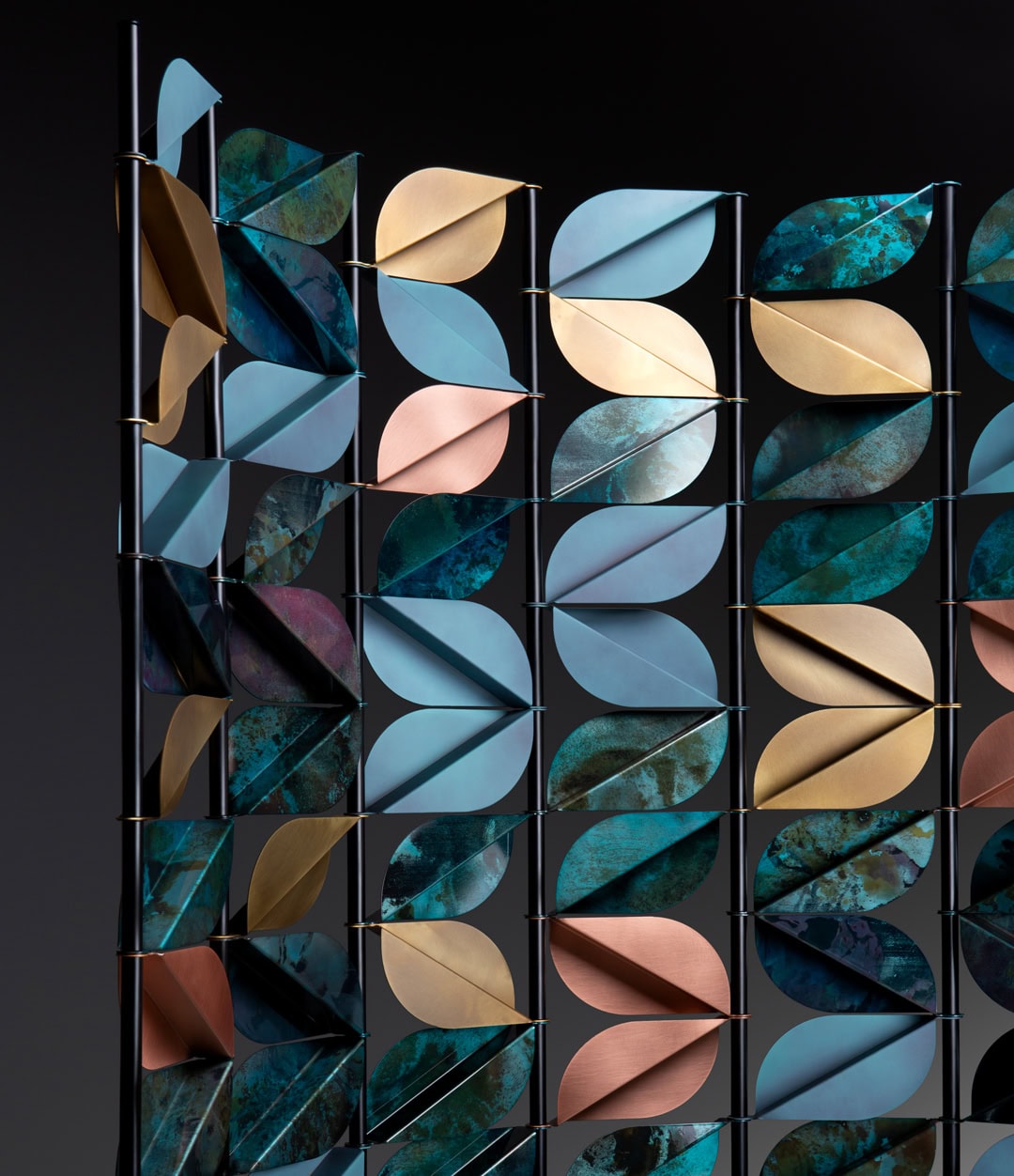
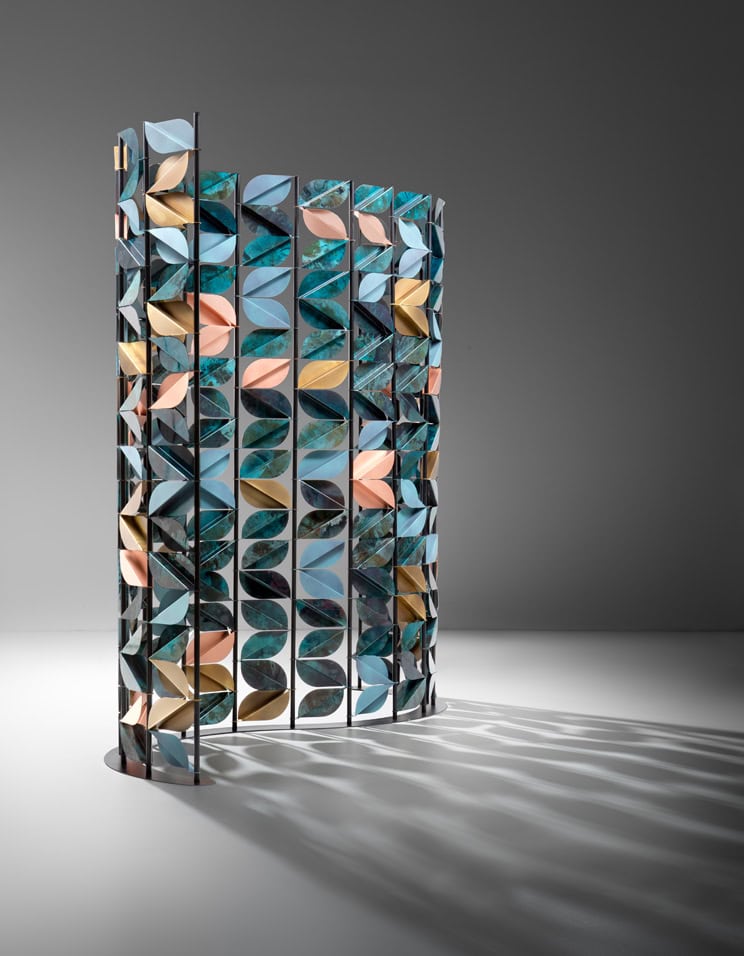
LO Bosque was created to evoke the qualities of a woven structure — rhythm, repetition, and permeability — dividing space without enclosing it. Taking inspiration from a vegetal architecture, it creates an intimate refuge that feels calm and protective. A sculptural room divider, it transforms decoration into a living presence: leaves climb parallel stems in an organic flow that recalls the changing seasons.
DC What role did metal play in the creative process?
LO Bosque emerged from a research and experimentation process developed with De Castelli around metal weaves and their design potential. It is a “non-weave weave” — permeable yet enveloping — able to interact with light, reflections, and color without the technical rigidity of traditional metal weaving.
It was a continuous dialogue between creativity and material experimentation: understanding the limits of metal, while enhancing its qualities.
DC How did you balance Bosque’s architectural presence with its function as a room divider?
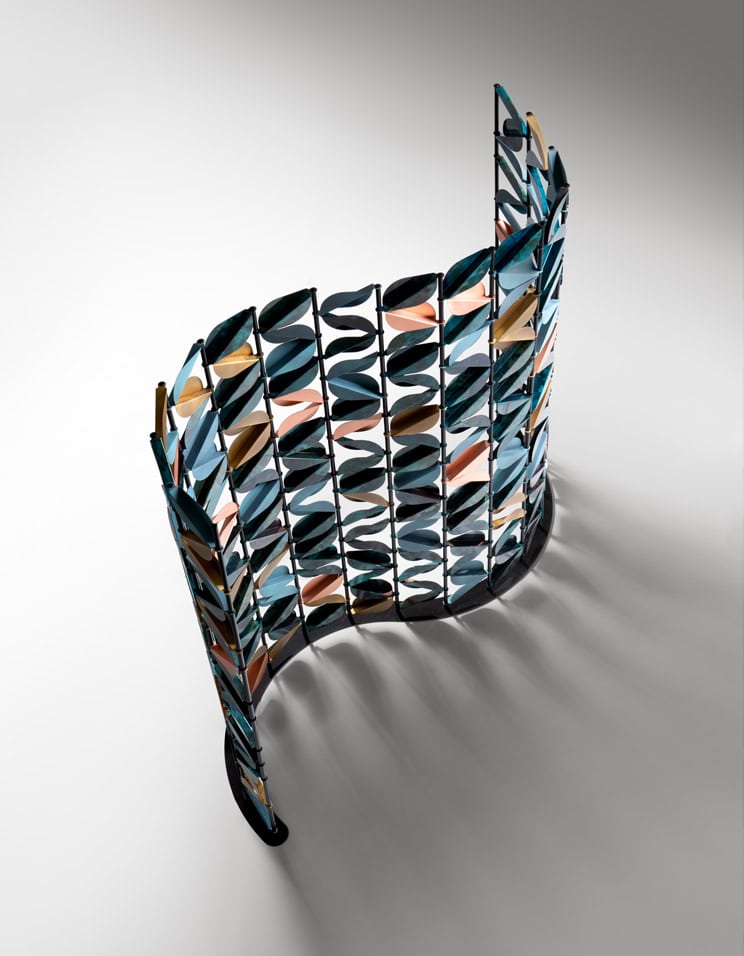
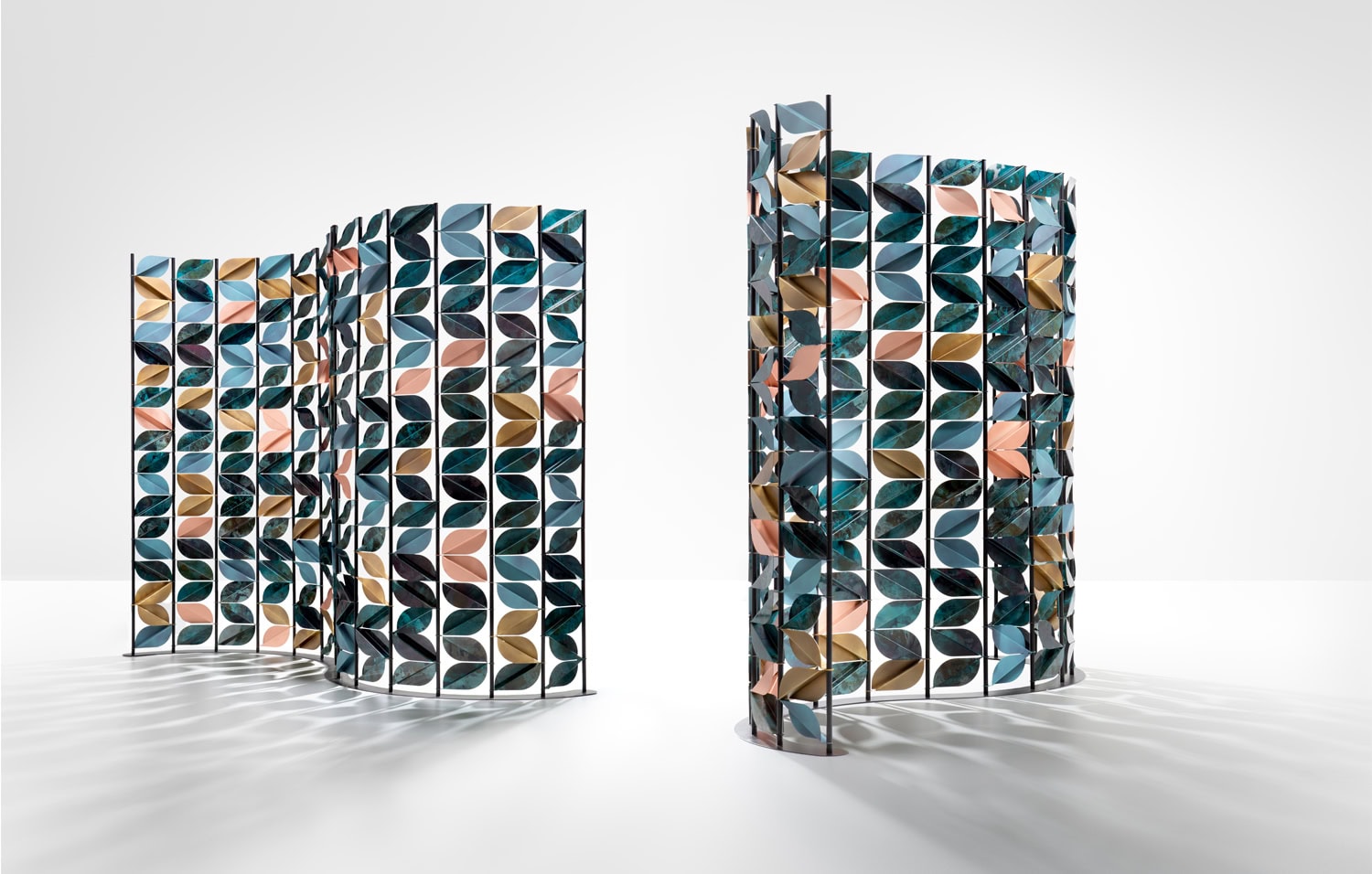
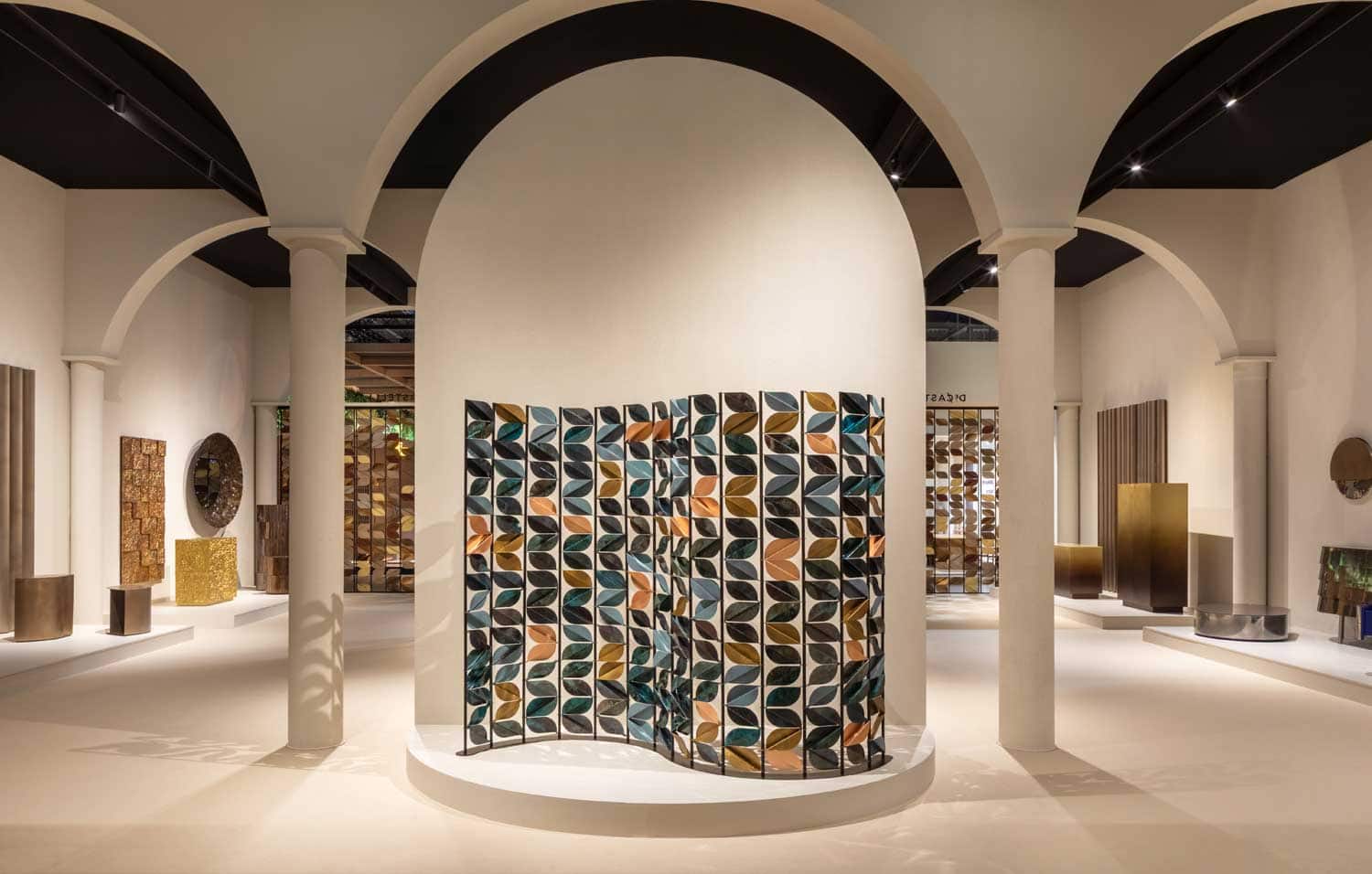
LO Bosque is a modular system that combines a precise architectural structure with a spontaneous, almost natural appearance. Its floor track can take on sinuous, circular, or zigzag configurations, while the system can also extend to full ceiling height. Leaves, stems, and luminous gaps evoke a natural landscape through endlessly variable compositions. Conceived as a dynamic, three-dimensional surface, Bosque is designed to be assembled and reconfigured over time.
DC Is there an anecdote, reflection, or particular note you’d like to share?
LO It was a continuous dialogue between creativity and material experimentation: understanding the limits of metal, while enhancing its qualities. Bosque is the result of a design process shaped through easerach, which allowed me to fully unlock the potential of metal.
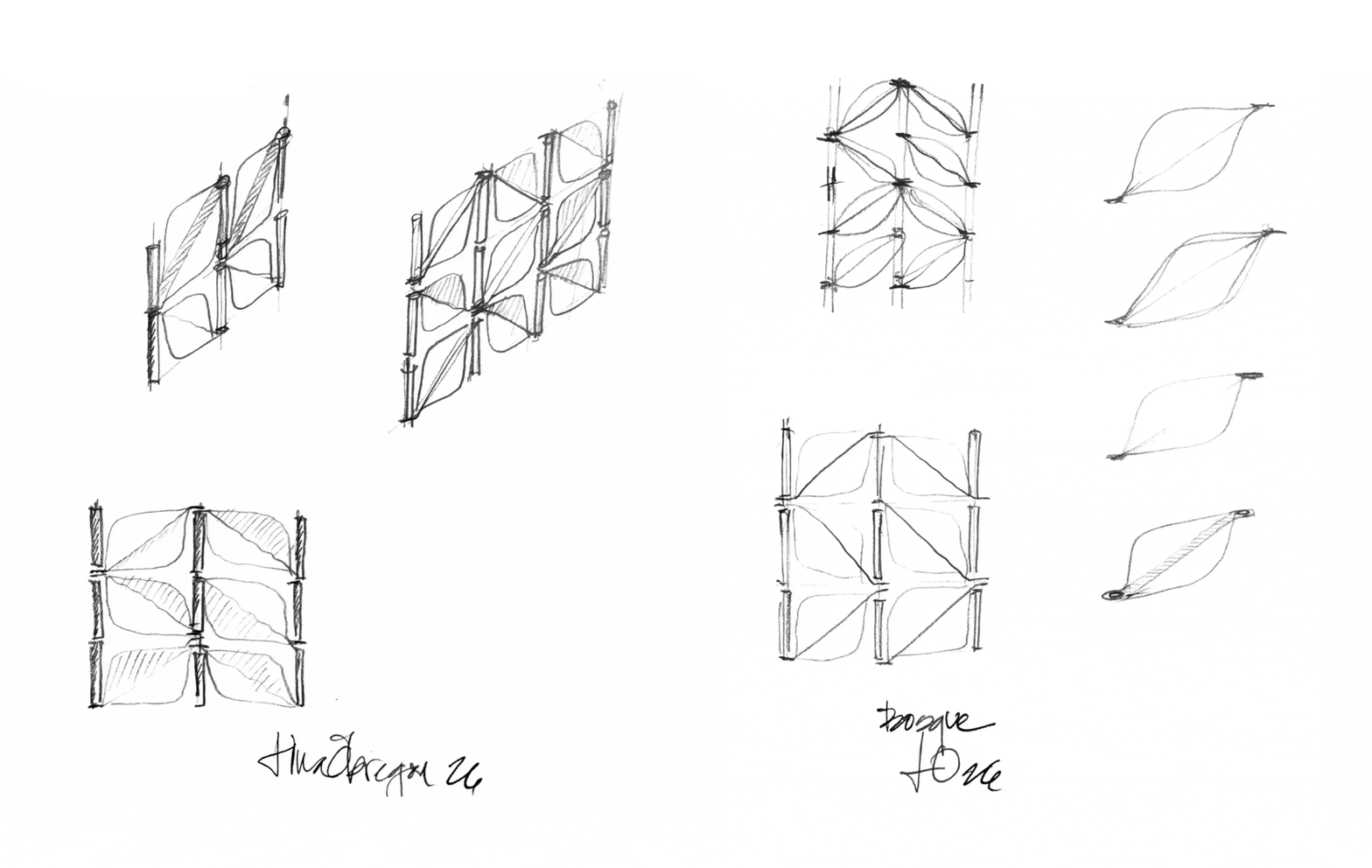
The project unfolded with lightness and curiosity, moving between sketches, simple cardboard and straw models, factory bending tests, and modelling. Often, the process itself guided the outcome, leading to unexpected results. The collaboration with De Castelli and the shared design curiosity were essential throughout. I am grateful for their enthusiasm and openness in exploring this journey together. Chromatic variations became a central exploration: choosing a single version felt impossible, as the finishes suggested ever-changing combinations. Each composition is punctuated by subtle highlights of brass and copper, like light filtering through foliage.
DC What was it like to see your product presented at the Salone del Mobile?
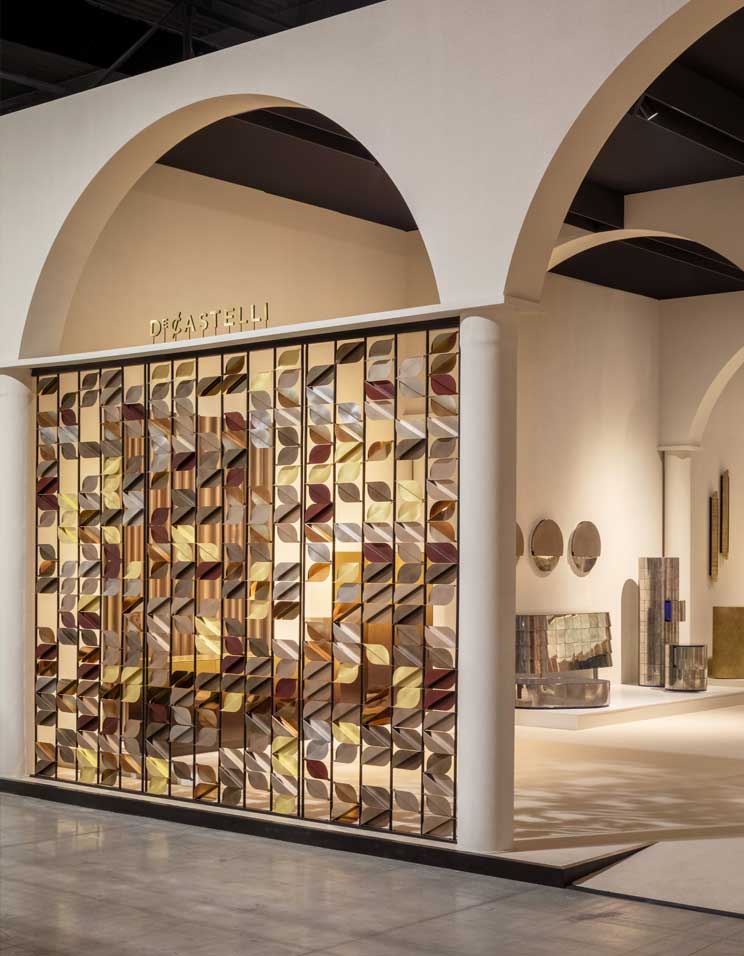
LO At the Salone del Mobile, Bosque was presented in its full essence: both as a defined product in the form of a screen, and as an architectural system extending across the stand façade at full height. The installation highlighted its compositional potential and its ability to adapt to and transform architectural spaces.
Seeing it exhibited there was especially moving. Bosque entered into a harmonious dialogue with the other pieces, balanced through materials, colours, and reflections. Light played a key role, passing through the metal leaves and surfaces to create depth, shadows, and shifting reflections. In that context, Bosque truly seemed to come alive.

As part of the 2026 edition of CombinAzioni Festival, De Castelli hosted two events that transformed its corporate spaces into places for listening, dialogue and participation.
