




Jocelyn Yang and Tiffany Liao
De Castelli engages in a dialogue with designers Jocelyn Yang and Tiffany Liao to explore the design philosophy behind the new decorative system Floem — an evocative narrative that bridges Eastern traditions and culture with a Western design approach, creating a surface that transcends the conventional canons of decoration to become a truly functional element.
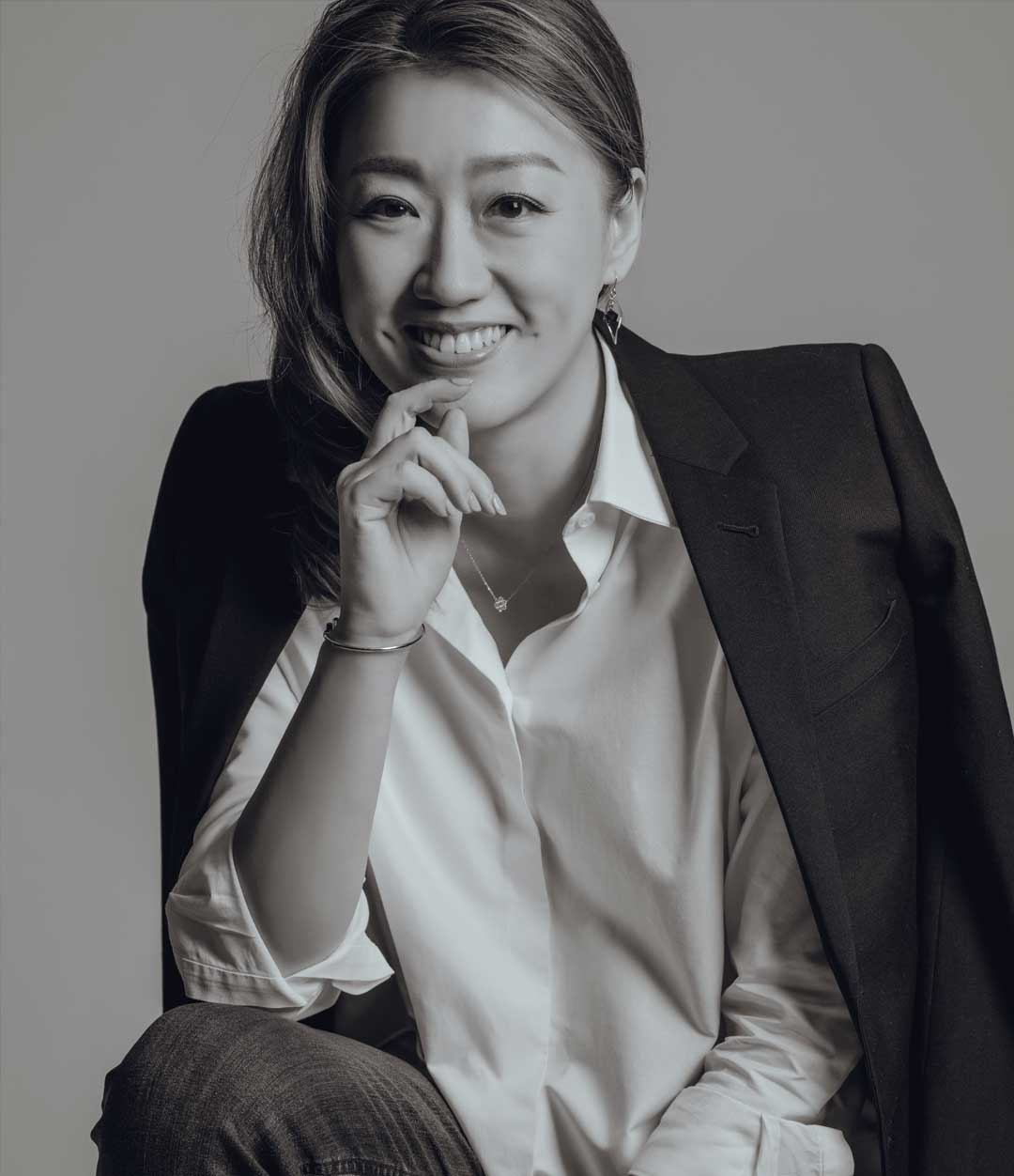
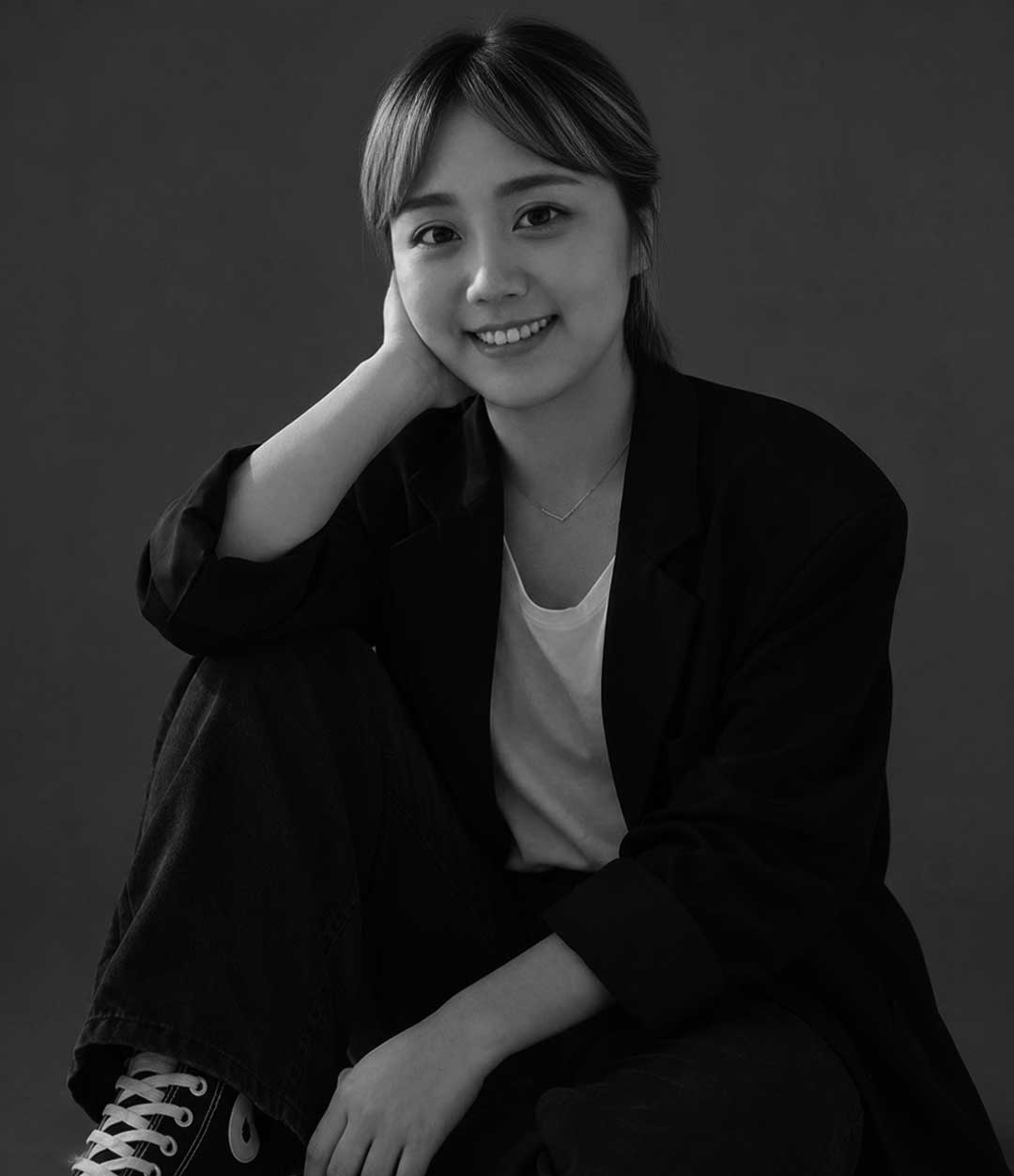
DC What inspired the development of Floem?
JY & TL Floem was inspired by the desire to translate the poetic imagination of flowers in Eastern culture into a contemporary design language. The name itself combines “Flower” and “Poem,” reflecting the intention to create works that transcend ornamentation and become vessels for emotion, memory, and spatial experience.
At the heart of Floem lies the image of the lotus. In Eastern culture, the lotus symbolizes purity, auspiciousness, resilience, and vitality. Yet Floem is not intended as a literal representation of nature. Instead, the project begins with a single petal.
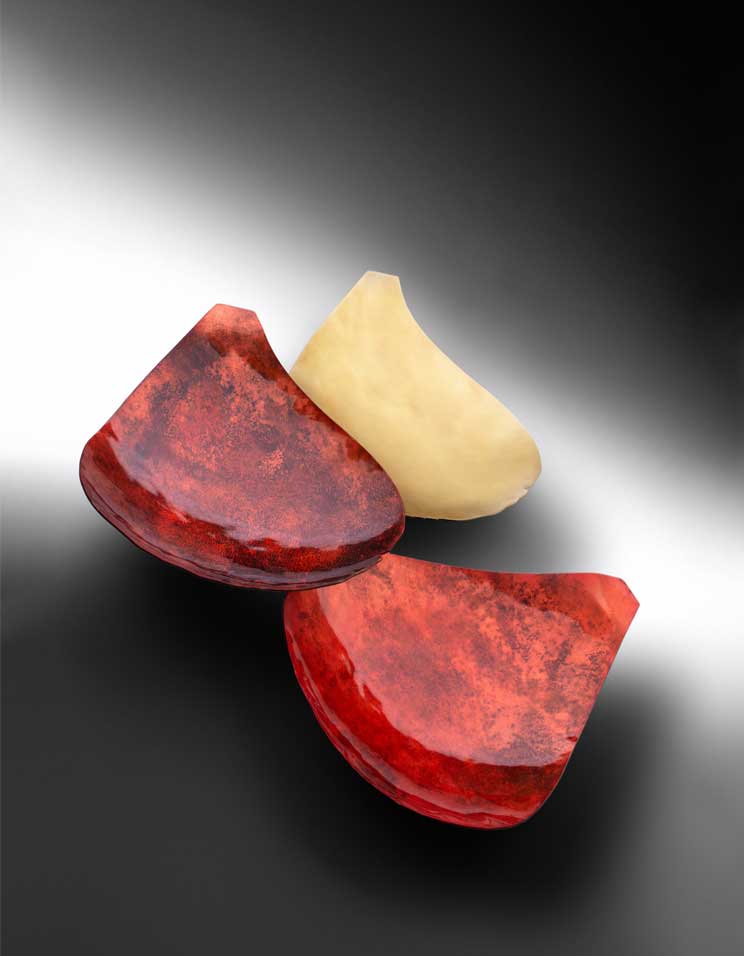
JY & TL A petal exists somewhere between form and formlessness. It does not obey rigid geometric rules, nor does it rely on absolute symmetry or modular repetition. Rather, it follows the logic of organic growth, maintaining difference within repetition and embracing variation within order. For this reason, the artwork is not composed through the assembly of geometric units. Instead, it is constructed through overlapping layers of petals that create a dynamic relationship between concealment and revelation, presence and absence.
It is not simply an interpretation of a flower. Floem expresses a distinctly Eastern way of seeing the world — one that finds the vast within the intimate, the eternal within the ephemeral. Through a single petal, we glimpse the passage of time, the hidden order of nature, and a quiet yet profound spiritual landscape.

DC Where does the composition originate from?
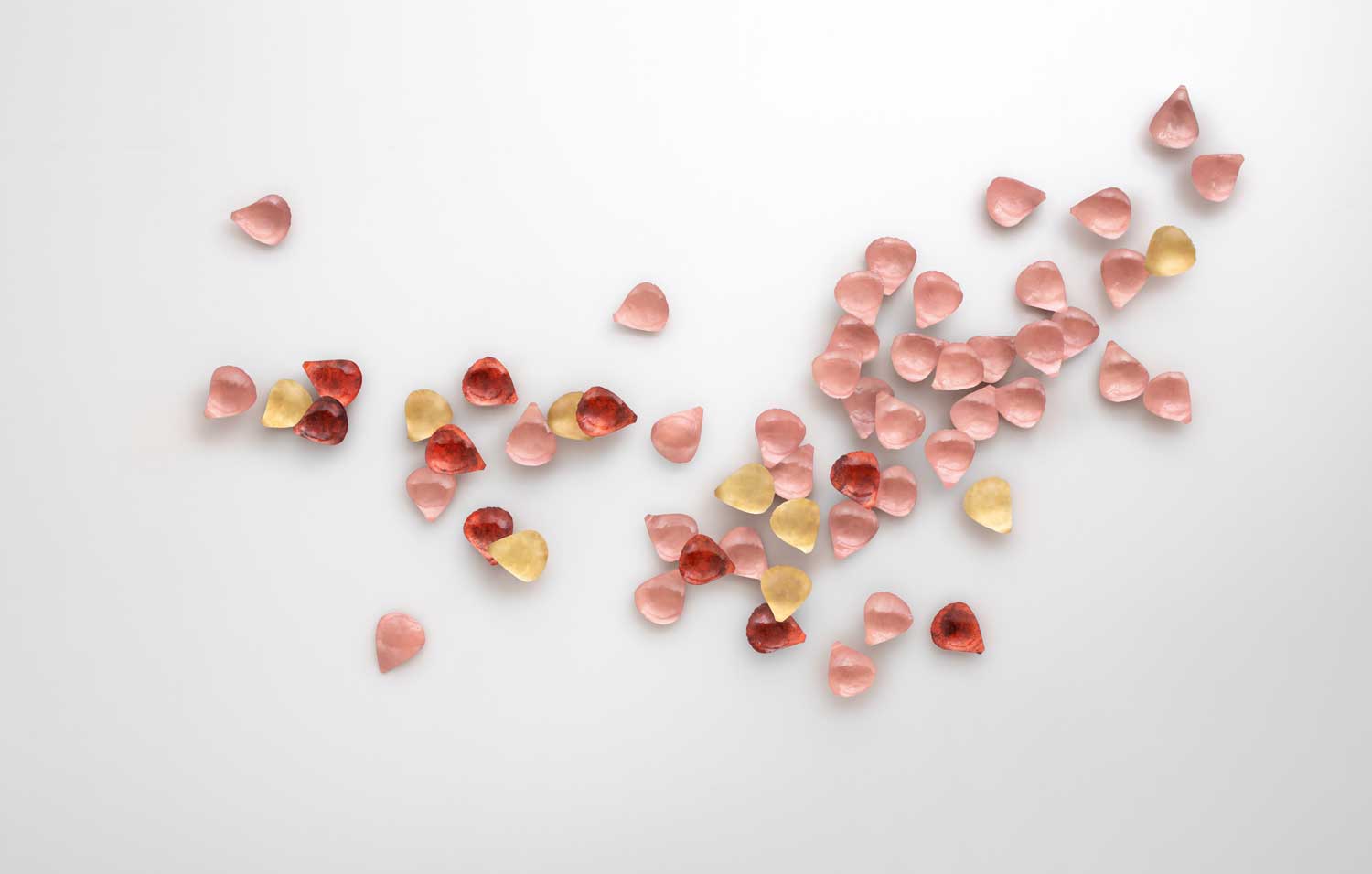
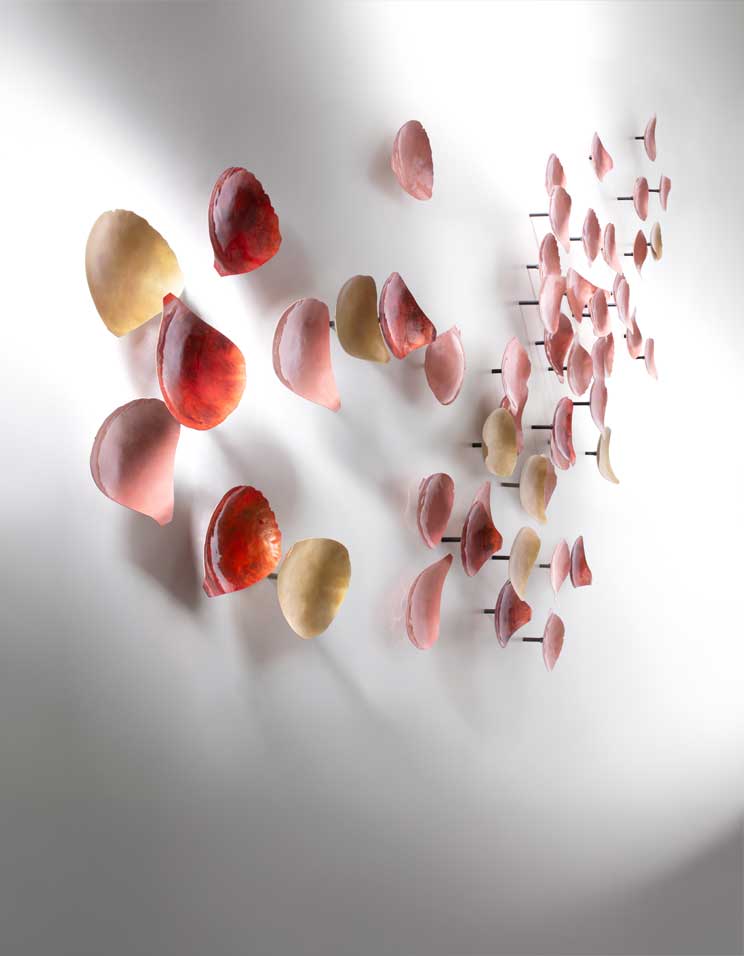
JY & TL The origin of the project was surprisingly simple. During the early stages of development, we bought several lotus flowers and began a series of experiments, carefully separating the petals and releasing them into the air. We observed how they fell, drifted, collided, and settled. Among countless arrangements, we selected the compositions that felt most beautiful and most alive.
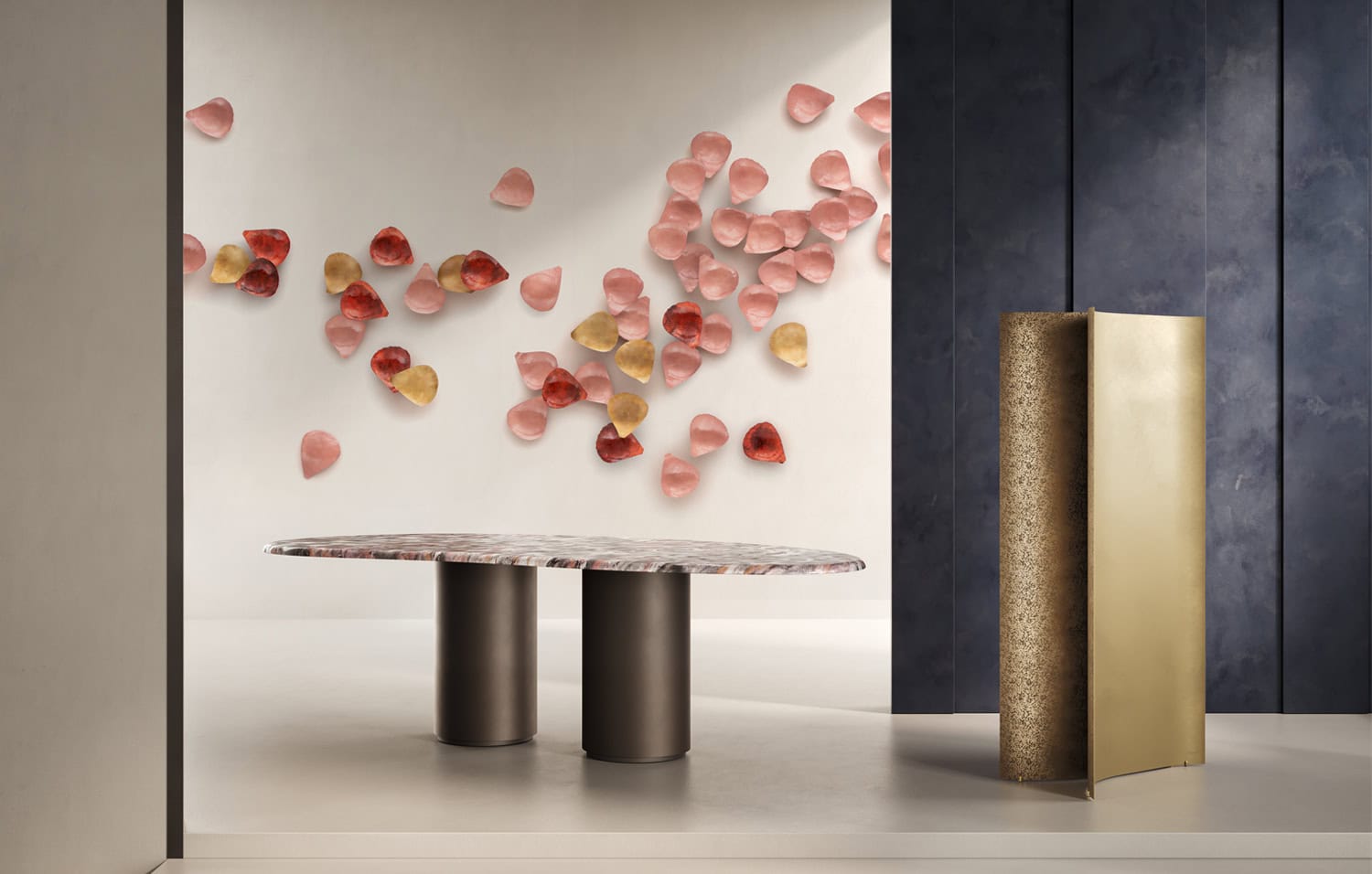
Instead of controlling every outcome, we allowed gravity, airflow, and chance encounters to participate in the design process. In a way, we intentionally returned part of the authorship to nature. Every metal petal is identical as an individual unit. Yet once scattered, each one begins to tell a different story. Variations in relief, tone, angle, and reflection create an ever-changing composition. Some petals tilt upward, others downward. Their orientations are never uniform. Like real fallen petals, they appear to breathe.
DC What role did the material play in the creative process?
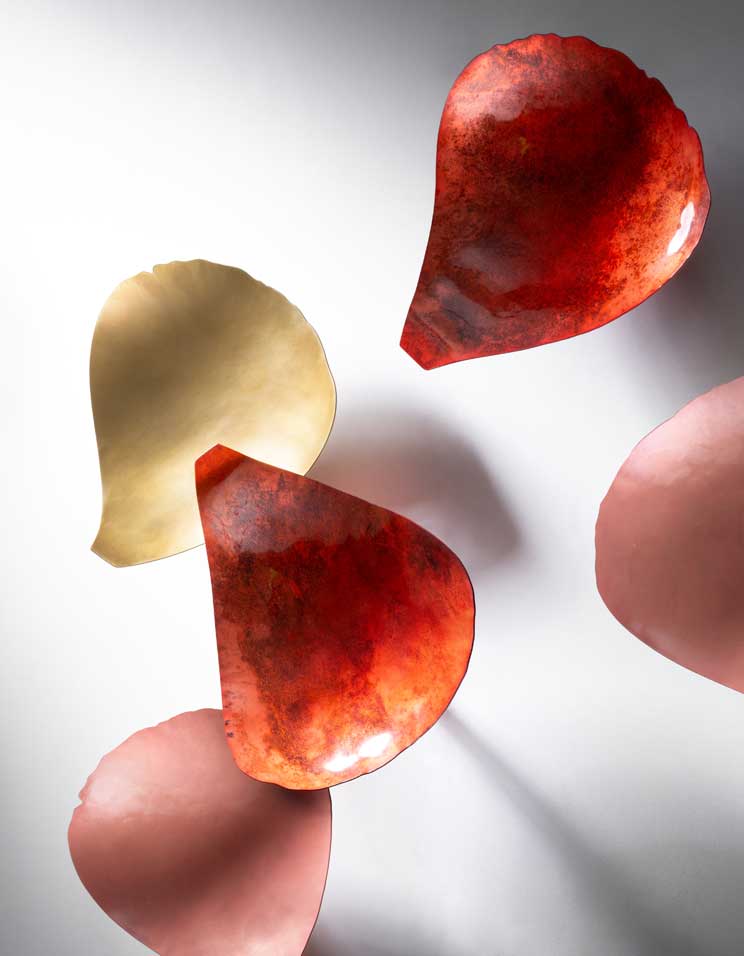
JY & TL The hardest metal becomes the softest petal. At the heart of Floem lies an idea deeply rooted in Eastern philosophy: softness does not overcome strength through opposition, but through transformation. It is not about resistance, it is about becoming. Each metal petal is shaped with subtle undulations, neither perfectly flat nor mechanically uniform. Gentle convexities and concavities move across the surface like traces of wind, as if the material had been lightly pressed by a human hand. These contours create a sense of breath. Light travels across them slowly. It glides, pauses, and glides again. Shadows emerge and dissolve. Through this constant dialogue between light and form, the metal seems to awaken. It is no longer cold, no longer silent. It begins to whisper.
Tones and textures appear to emerge from within the material rather than rest upon it. What makes the work compelling is the tension between opposites: the hardness of metal carries the softness of a petal, industrial precision recreates the spontaneity of nature, a cool and enduring material becomes the vessel for the most vibrant and fleeting colors.
DC What were the main challenges in developing the project?
JY & TL One of the greatest challenges was finding a way to express the essence of a flower petal through the most refined and contemporary lines possible, avoiding a form that felt merely geometric or generically organic. What we were searching for was something that carried a sense of nature — an abstract poetic quality that could be felt rather than explicitly seen. Together with De Castelli, we went through numerous prototypes before arriving at this final form, where everything came together.
The development of the surface finish was equally important. We wanted the tones to remain sophisticated, neither overly literal nor conventionally decorative. Our ambition was never to create an object that simply functions as decoration, nor merely an exercise in material composition. We hoped to go beyond the idea of something that is simply “beautiful,” approaching the work instead as an artistic installation — one that invites contemplation, emotion, and dialogue.
DC Is there a particular note or anecdote you’d like to share?
JY & TL This is our very first collaboration with De Castelli, and we are truly grateful for the opportunity.
As our first product design, we felt a strong desire to create a meaningful dialogue between the character of the piece and our own backgrounds. We sought to weave together different layers of identity and experience: our Eastern cultural roots, our perspective as female designers, and the sensibility we have cultivated through years of working on high-end design projects. The result is more than a product: it is a conversation between East and West, nature and geometry, softness and strength, traditional poetic sensibilities and contemporary aesthetics.
Seeing these petals unfold brilliantly across the most prominent feature wall of the exhibition at Salone del Mobile was an incredibly emotional moment for us, one that is difficult to put into words. To think that our work can now be presented on such a global stage, brought to life through De Castelli’s extraordinary mastery of metal craftsmanship, is something that fills us with immense excitement and gratitude.

As part of the 2026 edition of CombinAzioni Festival, De Castelli hosted two events that transformed its corporate spaces into places for listening, dialogue and participation.
