



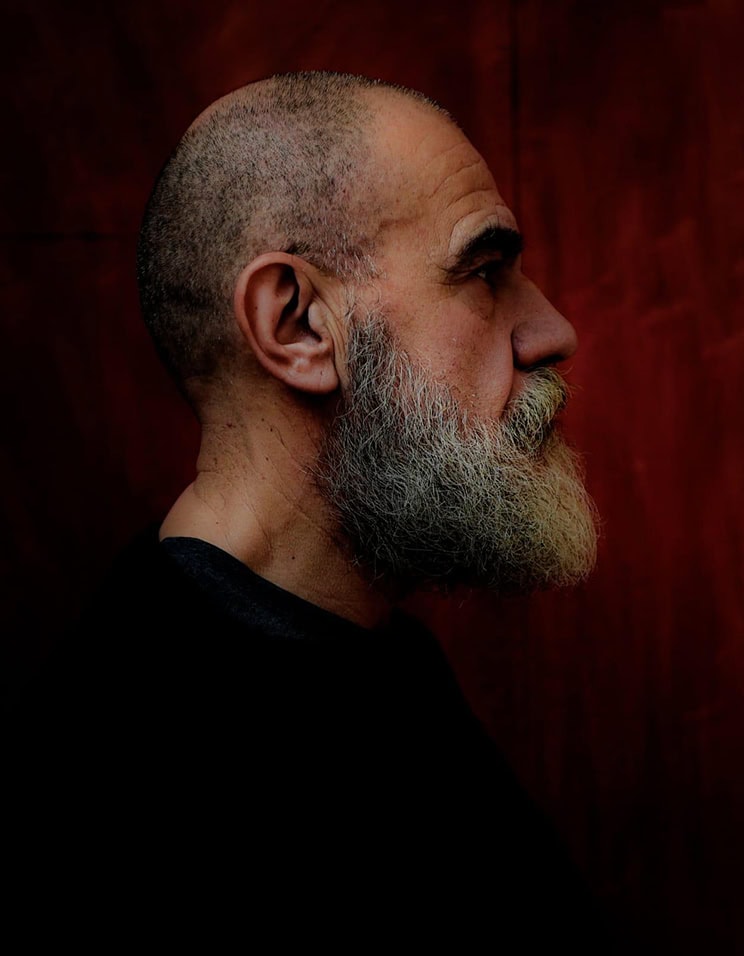
Giampiero Bodino
De Castelli dialogues with Giampiero Bodino in an articulate and profound exchange that explores the relationship between object, design, and surface. From this conversation emerges the story of a creative journey that led to the realization of two very different projects, bound together by the transformative nature of metal, capable of assuming ever-evolving forms and textures. From the Para-Vimento screen, inspired by the inlaid floors of Palazzo Litta in Milan, to the experimentation behind the Walt Chair, an armchair that reinterprets a Victorian classic in a contemporary key, both technical and poetic challenges come to light — where metal is not merely a material, but becomes light, movement, and narrative.
DC The two pieces, Para-Vimento and Walt Chair, represent distinct yet equally meaningful outcomes. What inspiration lay behind the creation of these projects?
GB These are two very different projects, conceived as an exploration of the possibilities that metal can offer.
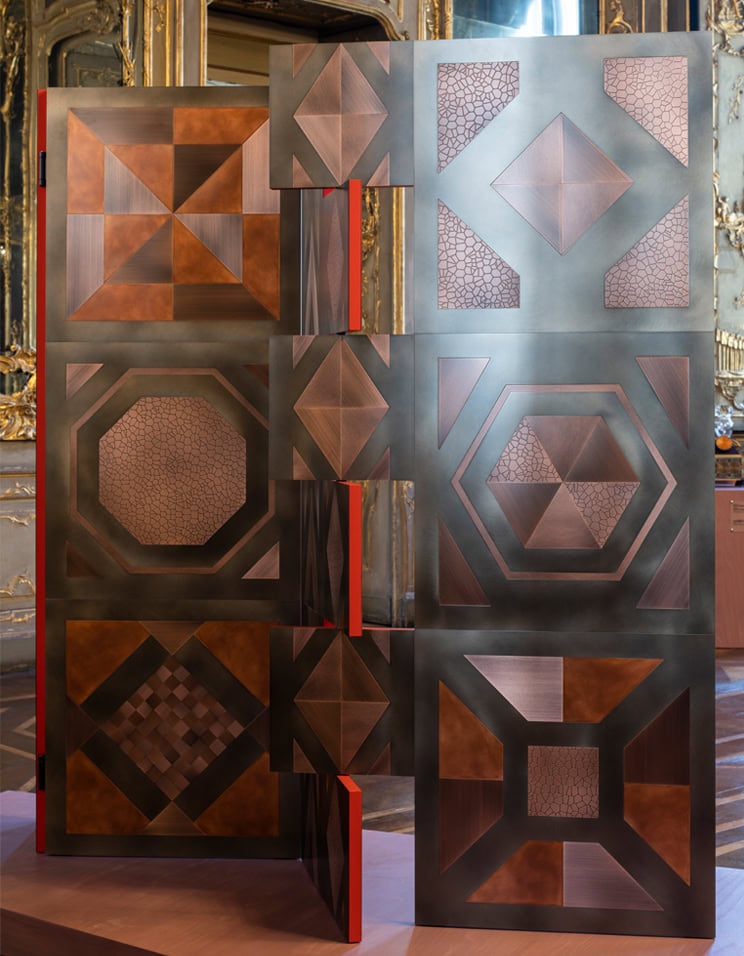
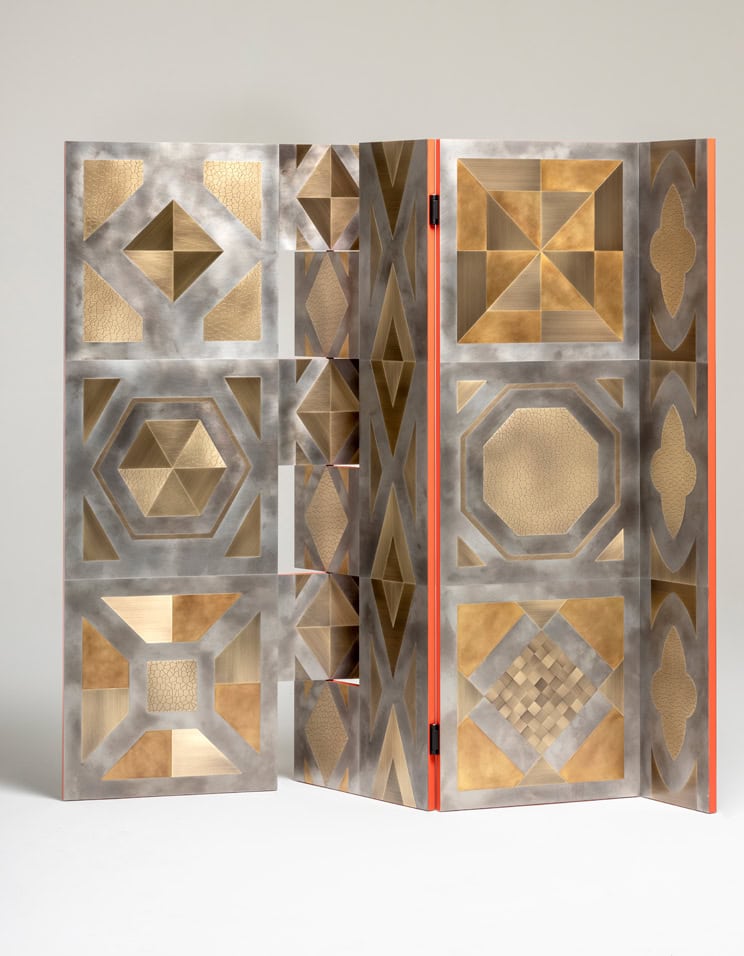
The first is a screen, an architectural dividing element, conceived in direct response to the context for which it was designed and in which it would be presented: Palazzo Litta in Milan. It can be understood as a site-specific intervention, conceived in dialogue with the interiors of the historic palazzo, and more precisely with its floors. The richly inlaid wooden floors, composed of geometric patterns, immediately captured my attention. From there came the idea of reinterpreting these motifs through metal, offering a renewed reading by translating the horizontal plane of the floor into a vertical surface. This conceptual shift lies at the origin of the name Para-Vimento. By employing metal inlay and playing with the nuances and finishes developed by De Castelli, it became possible to achieve subtle plays of light and surface contrasts. The screen features two sides that share the same design yet differ in chromatic expression: one cooler, realized in stainless steel and iron, and the other warmer, using brass and bronze.
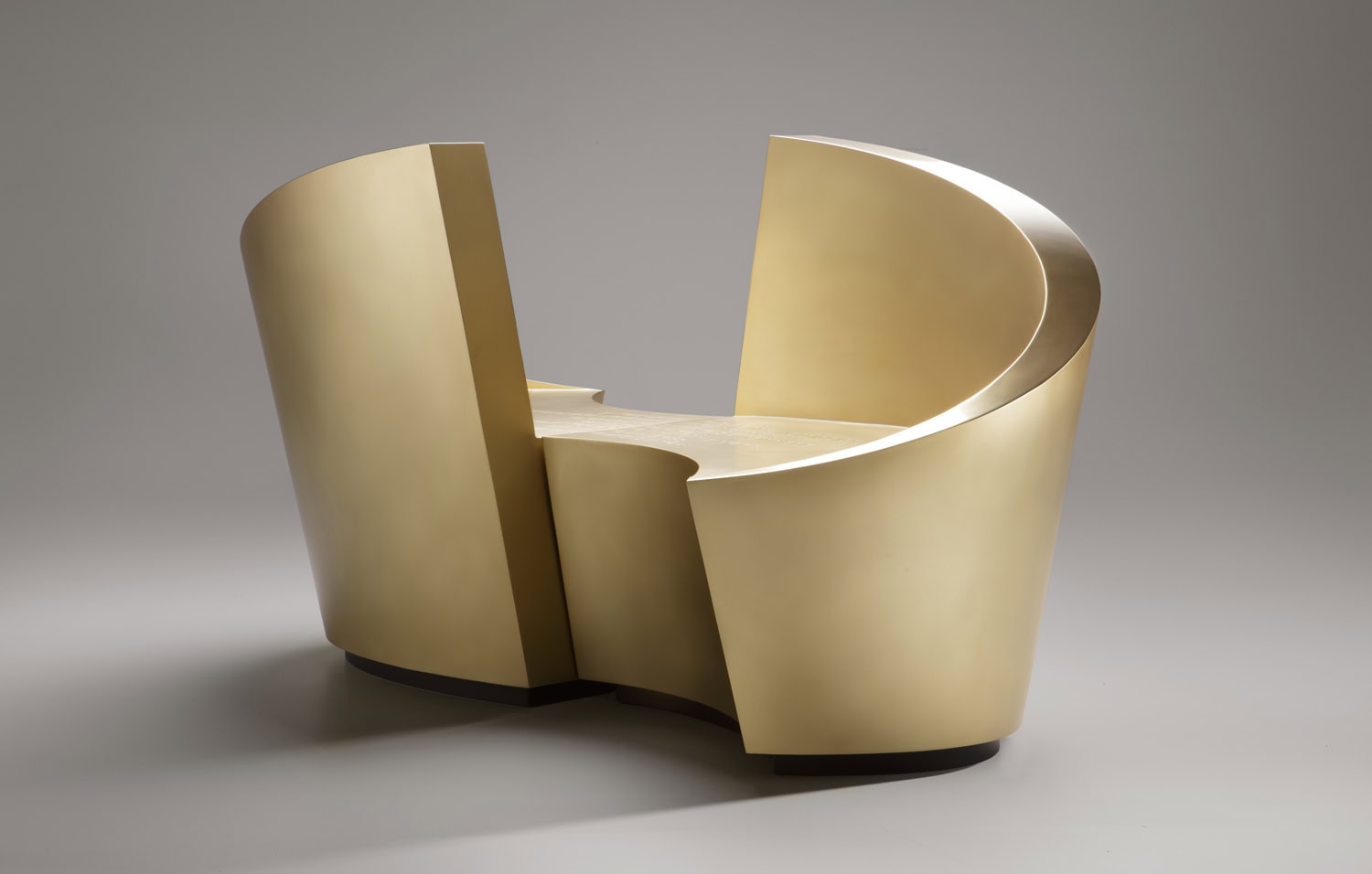
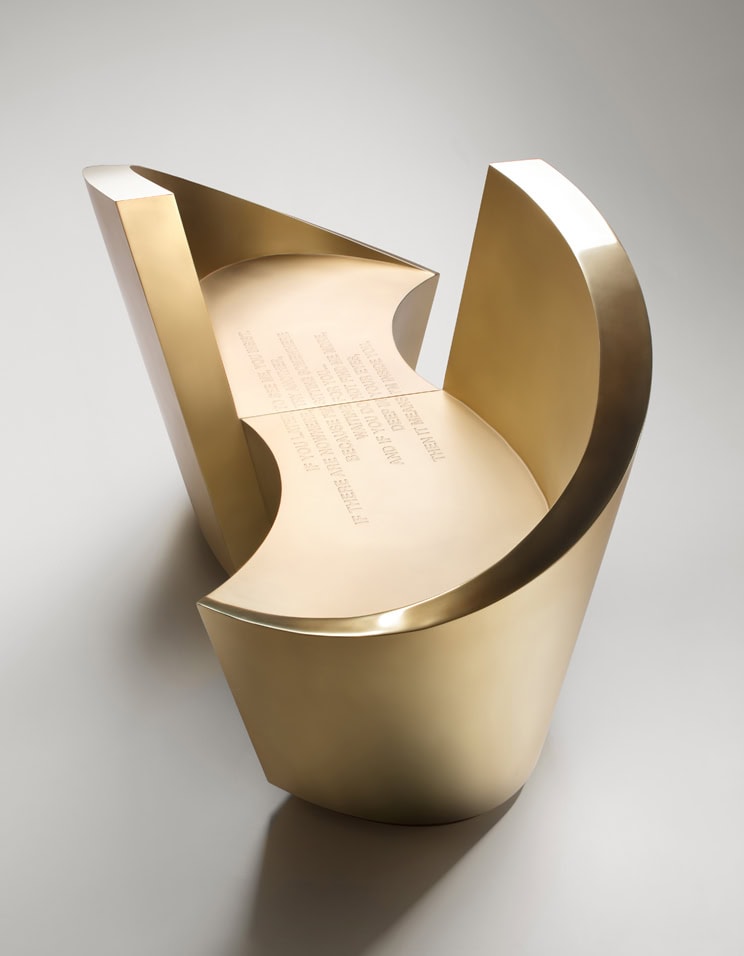
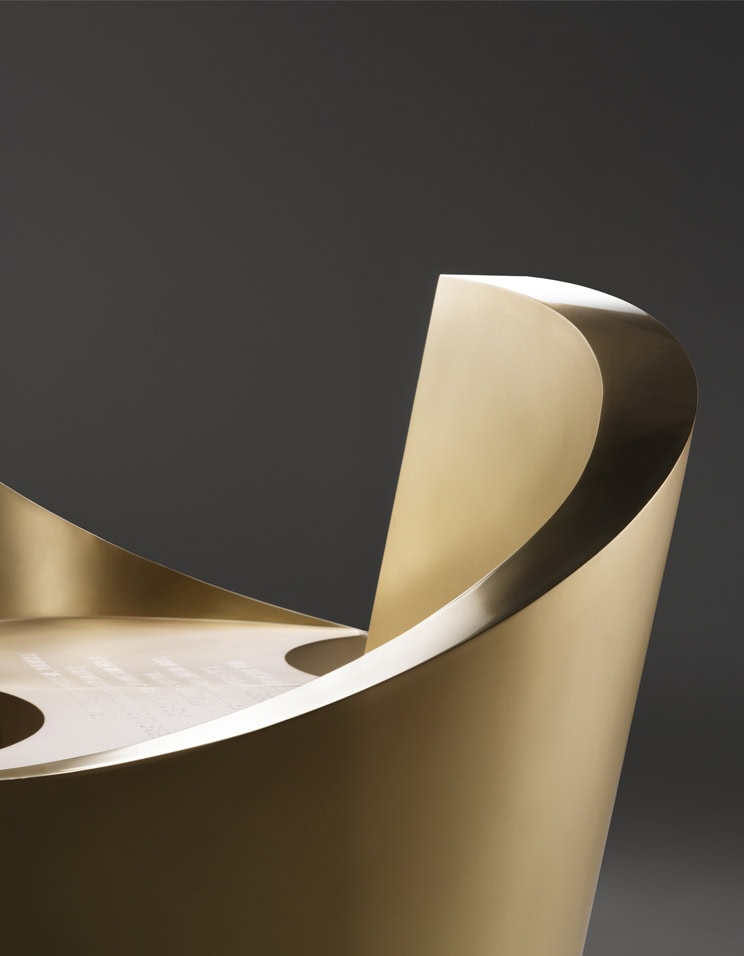
The second project reinterprets a two-seater armchair that was highly popular during the Victorian era. Originally conceived in France, it achieved widespread recognition under the name vis-à-vis or tête-à-tête, and later found equal success in England, where it was known by various evocative names — from conversation chair and courting bench to chaperon chair, gossip chair, and even the indiscret: a piece of furniture designed to suggest intimacy and emotional exchange. The intention was to create a seat for two that could exist as two autonomous armchairs when separated, yet, when brought together, form a single, continuous body. The resulting configuration subtly recalls the symbol of infinity and opens the possibility of a poetic reading inspired by Walt Whitman, an American writer considered the pioneer of free verse, and above all celebrated for having written a poem about love without ever explicitly naming it.
DC What were the major challenges in the realization of the two projects?
GB The most significant design challenge was undoubtedly the Walt Chair. The objective was to create a fluid, enveloping form starting from completely flat metal sheets. Studying the curvatures required to transform the metal into soft, harmonious lines proved to be an especially complex process, demanding a careful balance between technical rigor and creative freedom.
DC How did the collaboration with De Castelli develop over time?
GB The collaboration with De Castelli began with the first project that came out of the contact proposed to me by the Fondazione Cologni Arti e Mestieri, for the creation of a work within the exhibition Doppia Firma, held at Palazzo Litta in 2023. That initial experience naturally gave rise to a subsequent project, later presented in Venice during the Homo Faber exhibition in the summer of 2024. What I would like to highlight is the exceptional pleasure of working with De Castelli, within a context characterized by true collective collaboration, where every stage of the process is shared aiming of achieving the finest possible outcome. The partnership allows for the full expression of a material that, while challenging to work with, possesses the capacity to yield remarkable and extraordinary results.

De Castelli delves into the design philosophy of the Yoroi sideboard, exploring its sculptural and geometric essence.
